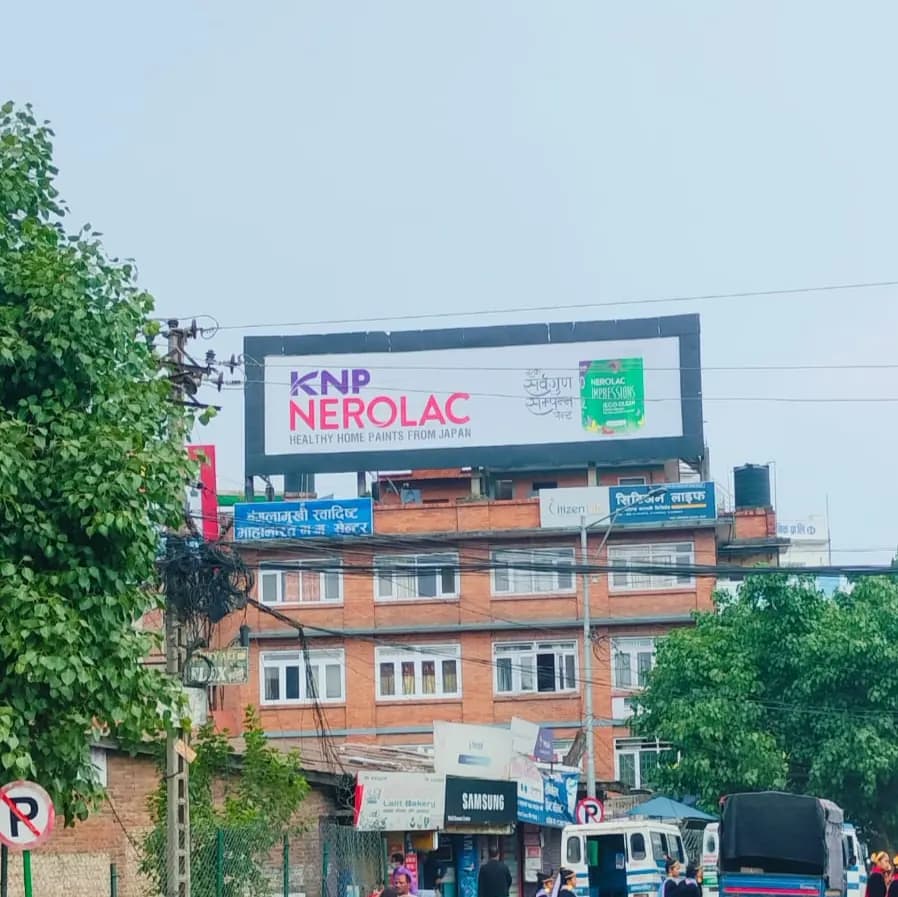
July 2, 2024
People often ask us, "Is this spot good for a hoarding board?" and point at any busy-looking road. Busy isn't always good. Here's what we actually check before we say yes.
First, how fast are people moving? A board on a highway where cars speed by needs huge letters and almost no words, because nobody has time to read a sentence. A board near a chowk where traffic slows down or stops — like Koteshwor or Maitighar — can hold a bit more detail, because people are looking at it for longer.
Second, which direction are people facing? This sounds obvious, but a lot of boards get wasted because they're built for traffic going one way, when most of the real audience is coming from the other direction, or waiting at a signal facing somewhere else entirely.
Third, what's already competing for attention nearby? A spot surrounded by ten other signs won't help you stand out. A cleaner spot, even with slightly less traffic, often works better because your board is the only thing to look at.
Fourth — and this one surprises people — how long does someone actually sit there? A bus stop or a signal where people wait for two or three minutes is often better than a fast road, because people have time to actually read and remember your message.
We walk every location ourselves before we recommend it. Not from a map, from actually standing there during morning and evening traffic, because a spot that looks empty at 11 AM might be packed with commuters at 6 PM.
So the next time you're picking a spot for your ad, don't just ask "is this road busy?" Ask who's on it, how fast they're moving, and how long they'll actually be looking your way. That's the difference between a board people remember and a board people drive past without noticing.